
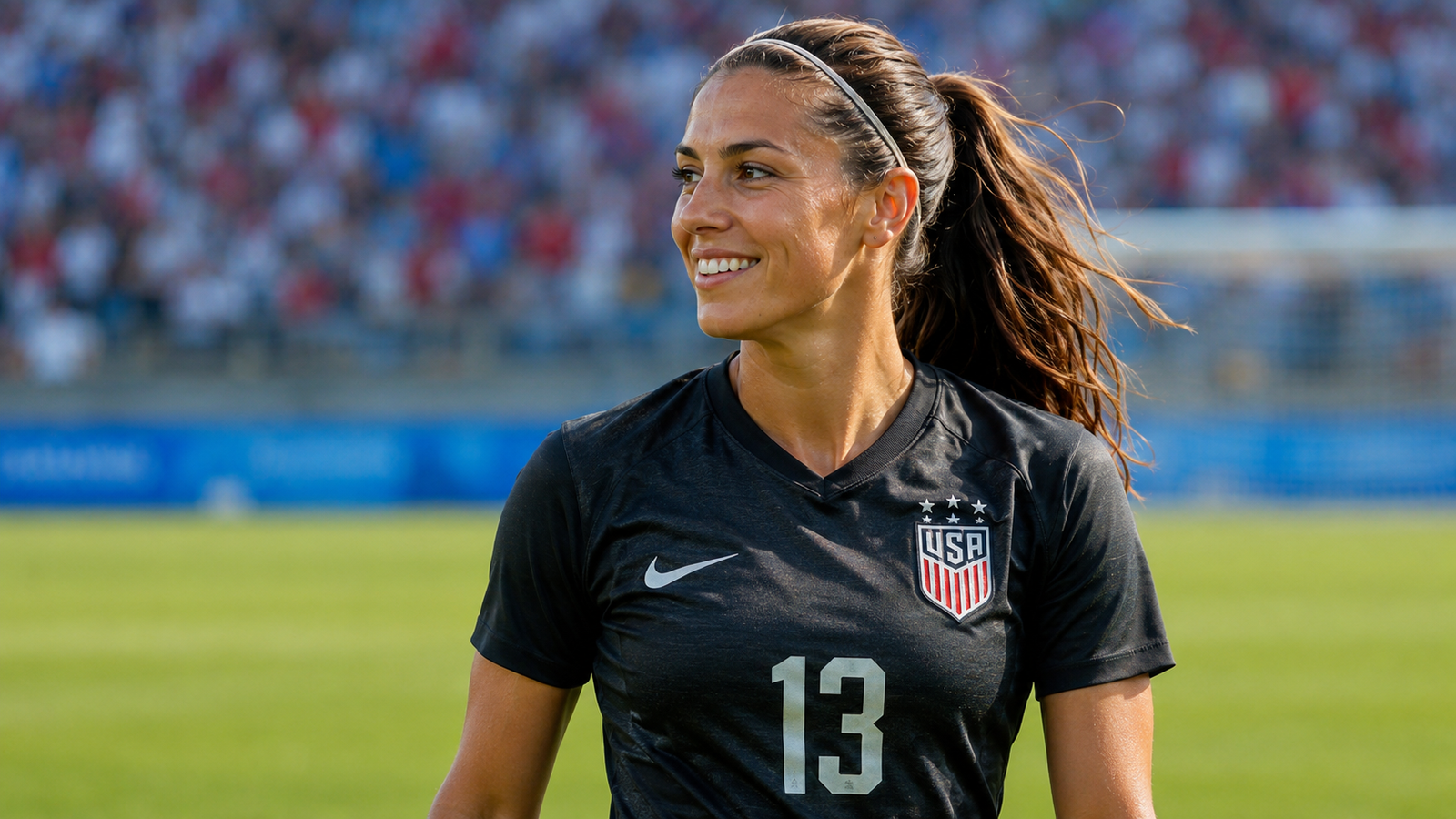
Something is happening in women’s sport that feels, for the first time, genuinely irreversible. Not the cautious, incremental progress of previous decades — a slightly larger television audience here, a modest increase in prize money there — but a rapid, structural, commercially driven transformation that is reshaping the landscape of global sport in real time.
The numbers tell part of the story. The 2023 FIFA Women’s World Cup in Australia and New Zealand attracted a cumulative global audience of over two billion viewers. The Women’s Super League in England has broken attendance records in consecutive seasons. The WNBA is experiencing its highest viewership figures in over two decades. Women’s tennis has long been competitive with men’s tennis in terms of audience and commercial value at the Grand Slams. The Indian Premier League’s women’s competition attracted broadcast rights bids that stunned even optimistic observers. Across sport after sport, in market after market, the growth curve is pointing sharply upward.
But numbers alone do not explain why this is happening now, so fast, and with such apparent momentum. The reasons are multiple, interlocking, and worth examining in detail — because understanding them tells us something important not just about sport, but about broader shifts in culture, commerce, and media.
The Role of Visibility: You Cannot Follow What You Cannot See
For most of the history of women’s sport, the fundamental problem was not lack of talent or lack of interest — it was lack of visibility. Women’s sporting events were rarely broadcast on mainstream television. When they were, they were scheduled at unfavourable times, given minimal production budgets, and promoted with little enthusiasm by broadcasters who had already concluded that audiences were not interested.
This was a self-fulfilling prophecy of the most damaging kind. Audiences did not watch women’s sport in large numbers partly because they were never given the opportunity to develop attachment to athletes, teams, and competitions in the way that sustained viewership requires. You cannot become a fan of something you cannot easily find.
Streaming has broken this dynamic comprehensively. Platforms like DAZN, Amazon Prime, Peacock, and others have invested heavily in women’s sporting rights — not always because the commercial case was fully established, but because the content was affordable, the growth potential was real, and the audience demographics were attractive to advertisers. The effect has been transformative. Competitions that were previously invisible are now accessible to global audiences on demand, and those audiences, given the opportunity to watch, have demonstrated appetite in numbers that have consistently exceeded projections.
Social media has amplified this effect. Athletes like Sam Kerr, Alexia Putellas, Caitlin Clark, and Vivianne Miedema have built enormous personal followings on Instagram, TikTok, and X — followings that translate directly into audience interest when they compete. The individual athlete as media personality is not a new phenomenon in men’s sport, but it is relatively new in women’s sport, and its commercial implications are substantial.
Investment: The Commercial Case Has Been Made
For decades, the standard response from sports organisations and broadcasters when asked why women’s sport received less investment was circular: we invest less because the audiences are smaller, and the audiences are smaller because we invest less. Breaking that circle required someone to make a bet on growth — and in the last five to eight years, a critical mass of investors, broadcasters, and governing bodies have made that bet.
The results have validated the investment consistently. When the Women’s Super League received a dedicated broadcast deal with Sky Sports and the BBC in England, audiences grew substantially. When the NWSL in the United States secured a broadcast deal with major networks, viewership climbed. When major sponsors began attaching their brands to women’s sporting events at comparable levels to men’s events, the production quality and promotional budgets followed — creating the kind of polished, professional presentation that audiences expect from elite sport.
Private equity has entered women’s sport in a significant way. Investment groups have purchased stakes in women’s football clubs, franchises in the NWSL and WSL, and emerging women’s competition structures in cricket and basketball. These investors are not making philanthropic gestures — they see undervalued assets in a growth market, and they are deploying capital accordingly.
The sponsorship landscape has shifted too. Brands that are actively seeking to reach younger, more diverse audiences — which is to say, most major consumer brands — have found women’s sport to be an unusually effective vehicle. The audiences skew younger than comparable men’s events, the social media engagement rates are higher, and the association with values like progress, equality, and determination resonates with consumer preferences in a way that purely transactional sports sponsorship often does not.
Cultural Shift: A Generation That Grew Up Differently
The growth of women’s sport is also, fundamentally, a generational story. The young adults who are now in their twenties and thirties grew up in a world where women’s sport had a presence — however limited — that the previous generation did not have. They saw women compete at the Olympics with serious media coverage. They played in school and club sport in numbers that previous generations did not. They consumed media in which female athletes appeared with increasing regularity.
This generation does not approach women’s sport with the condescension or indifference that characterised older demographics. They approach it as fans — evaluating athletes on the quality of their performance, the drama of the competition, the personality of the individuals involved. When they watch a Women’s World Cup match or a WNBA playoff game, they are not making a political statement or performing virtue. They are watching sport they genuinely enjoy.
This shift in audience psychology is crucial because it means the growth of women’s sport is not dependent on goodwill or social pressure — it is increasingly driven by the same mechanisms that drive the consumption of men’s sport: entertainment value, tribal loyalty, individual athlete fandom, and the simple pleasure of watching elite competition.
The Athlete Quality Argument
There is a straightforward sporting reason for the growth of women’s sport that sometimes gets lost in discussions about media investment and cultural change: the athletes are extraordinarily good, and they are getting better.
The depth of talent in women’s football, basketball, tennis, cricket, and athletics has increased dramatically over the past twenty years, driven by larger participation bases, better coaching, improved sports science, and the professionalization of training environments. The gap between the best women’s athletes and their predecessors is striking — not because earlier generations lacked talent, but because earlier generations lacked the structural support to develop it fully.
When Caitlin Clark shoots from ranges that would be extraordinary in any competition, when Sam Kerr volleys goals of genuine beauty, when Ellyse Perry dismantles batting lineups with fast-medium bowling that would be respected in any format of cricket — these moments generate genuine sporting excitement independent of any broader narrative about women’s sport. The quality justifies the attention.
This creates a virtuous cycle: better athletes attract larger audiences, larger audiences attract more investment, more investment creates better training and development environments, better environments produce better athletes.
The Structural Reforms That Changed Everything
Behind the cultural and commercial shifts, a series of structural reforms in major sporting organisations have created the conditions for growth in concrete ways.
Equal prize money at Grand Slam tennis tournaments, now established for decades, demonstrated that the principle of equal value could be applied without catastrophic commercial consequences — and in fact had no negative consequences at all. The model has been influential in other sports.
The creation of dedicated professional leagues for women — the WSL, NWSL, WNBA, and their counterparts in cricket, rugby, and other sports — gave athletes the professional environment that talent development requires. Athletes who previously had to hold second jobs while training part-time are now, in the top leagues, full-time professionals with coaching staff, sports science support, and media training. The quality improvement that has followed was entirely predictable.
Governing bodies have also invested in women’s competitions at the international level with increasing seriousness. FIFA’s investment in the Women’s World Cup — in production quality, in marketing budgets, in prize money — has grown substantially over successive tournaments, and the audience response has rewarded that investment.
The Caitlin Clark Effect and the Power of Stars
No discussion of women’s sport’s recent growth is complete without acknowledging the role of individual star power. Caitlin Clark’s emergence from the University of Iowa into the WNBA in 2024 generated a level of mainstream media attention for women’s basketball that the league had never previously experienced. Her games broke viewership records. Her jersey became the fastest-selling in WNBA history. Arenas that had previously been half-empty sold out months in advance.
The Caitlin Clark effect is significant not because it is unique, but because it illustrates a broader truth: women’s sport, given sufficient exposure and the right individual narratives, can generate the kind of passionate, widespread fandom that was previously considered the exclusive domain of men’s sport. Clark is not the only example — Alexia Putellas’s dominance in women’s football, Smriti Mandhana’s elegance in women’s cricket, the collective brilliance of the US Women’s National Soccer Team across multiple World Cup cycles — all have generated genuine mass engagement.
Stars matter in sport because they give casual fans a point of entry — an individual story to follow, a personality to connect with, a name to look for on the teamsheet. Women’s sport now has stars in sufficient numbers and with sufficient media presence to generate that entry point for audiences at scale.
What Comes Next
The growth of women’s sport is real, but it is not yet irreversible in every market and every discipline. The gains of the past decade need to be consolidated through continued investment, continued improvement in broadcast quality and accessibility, and continued development of the professional infrastructure that elite athletes require.
The pay gap between men’s and women’s sport remains significant in most disciplines — not because the principle of equal value has been rejected, but because the commercial revenues that fund men’s sport are still substantially larger. Closing that gap will take time and sustained growth in audiences and sponsorship revenues.
But the direction of travel is clear, and the momentum is genuine. Women’s sport is growing because it deserves to grow — because the athletes are exceptional, the competitions are compelling, and the audiences, given the chance to watch, have responded with enthusiasm that continues to exceed every projection.
The question is no longer whether women’s sport will achieve parity with men’s sport in terms of audience, investment, and cultural significance. The question is how long it will take. And the answer, looking at the current rate of change, is: sooner than most people thought possible even a decade ago.